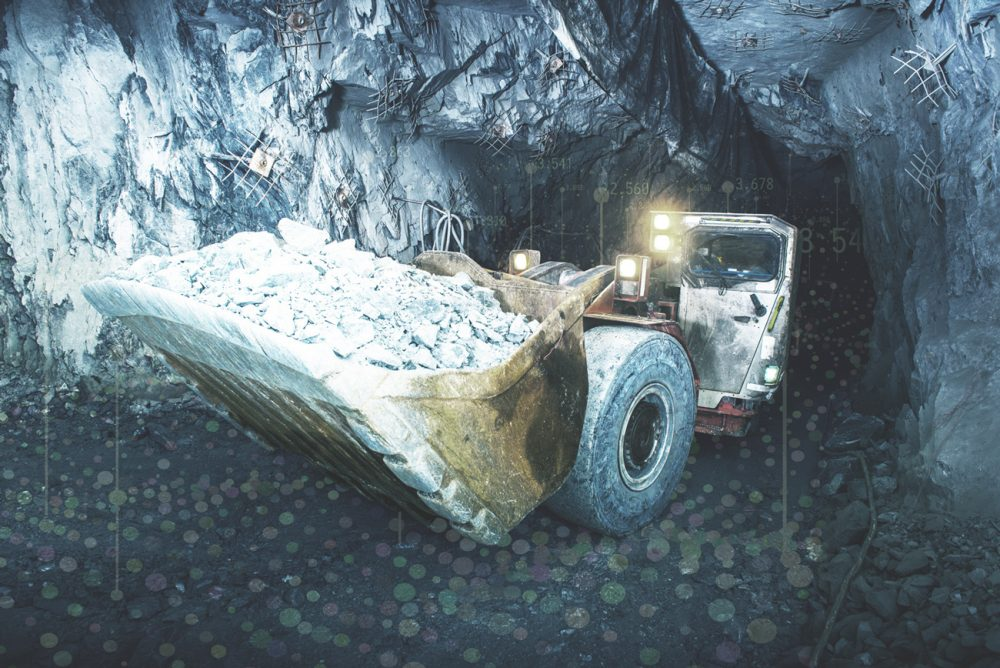
The mining industry has traditionally been considered one of the most complex and dangerous sectors of industry. The high level of risk to miners’ lives, strict safety requirements, the need for uninterrupted equipment operation, and pressure from competitors create the necessity to implement modern solutions. Today, the main development vector is digitalization and the creation of integrated automation systems.
Such technologies not only simplify the management of mineral extraction processes but also make it possible to significantly reduce costs, increase productivity, and minimize the impact of the human factor.
The Current State of Automation in Mining Production
Today, the level of automation at enterprises varies significantly: from manual control methods to the use of comprehensive digital platforms. One example of modern solutions is Minepass — a technology focused on integrating various subsystems into a single information space.
- Fragmentary automation. Sometimes digitalization is limited to the implementation of individual sensors or monitoring systems that are not interconnected and function in isolation.
- Integrated platforms. Technologies like Minepass combine geological data, plant management, logistics control, and safety into a single digital framework.
- “Last mile” of data. A key problem of many solutions is the lack of information from the lower level – sensors, actuators, and underground communication modules.
- Uneven enterprise development. Some companies have implemented MES and ERP systems, while others still rely on paper reports and phone calls as the main dispatching tools.
The transition to digital platforms like Minepass is a natural stage in the industry’s evolution. This solution provides centralized storage and analysis of information, forming the basis for future implementation of digital twins of mines and the shift toward low-manpower mining technologies.
The Role of Dispatching Systems in Mine Control
Mine dispatching plays an important role in ensuring the safety and efficiency of mining operations. Modern dispatch centers face a massive amount of data coming from control devices and sensors. Without the implementation of automated solutions, a person is physically unable to process such a flow of information.
- Operator overload. Dispatchers are forced to simultaneously monitor dozens of screens and systems, including gas control, video surveillance, transport, and equipment. Automation helps to avoid this problem.
- Personnel positioning. Thanks to the integration of positioning technologies, it becomes possible to monitor personnel movements in real time and automatically respond to violations.
- Unified control centers. Large companies establish integrated dispatch and analytics centers, where information from several enterprises and mining plants is collected for centralized analysis.
- Reducing the impact of the human factor. The use of algorithms makes it possible to automatically sort alerts and highlight priority signals, reducing operator workload.
Modern mine dispatching goes beyond simple monitoring. It becomes a tool of strategic control, allowing not only to ensure safety but also to make decisions for optimizing the production process.
Main Components of Automated Control Systems
Modern automated process control structures are built on a combination of hardware and software. Their integration creates a unified digital framework, where a key role is played by underground positioning and intelligent data processing.
- Sensors and measuring systems. They record atmospheric parameters, equipment condition, personnel movement, and other critically important indicators.
- Programmable Logic Controllers (PLCs). Modern explosion-proof PLCs provide data transmission and processing in real time, even in harsh environments.
- Communication. Wi-Fi networks and radio modules support uninterrupted interaction between underground equipment and surface dispatchers.
- Video surveillance and video analytics. Cameras record safety violations and allow monitoring of conveyor belts, although dust and poor lighting remain a challenge.
The integration of these components makes it possible to build flexible solutions, where underground positioning and sensors become the “eyes and ears,” while PLCs provide intelligent real-time control.
Advantages of Subsystem Integration
The main value of automation lies in integrating diverse subsystems into a single platform. This approach creates a synergistic effect and makes it possible not only to increase safety but also to reduce costs.
- Increased safety. Automatic conveyor shutdown when a miner is detected on the belt or equipment shutdown when methane concentration exceeds limits prevents accidents.
- Reduced downtime. Diagnostic and predictive maintenance technologies help detect failures before they lead to accidents.
- Optimized logistics. Monitoring the movement of diesel-hydraulic locomotives and cargo flows helps avoid “traffic jams” in underground workings and speeds up ore delivery.
- Improved dispatch efficiency. Data integration removes unnecessary load from operators, leaving only truly important signals.
As a result, the enterprise gains a double benefit: on the one hand – reduced accident and injury rates, on the other – increased productivity and lower operating costs.
Development Prospects
The digital transformation of the mining industry continues, and in the coming years, active implementation of new technologies is expected. The main directions of development are associated with the creation of fully automated enterprises and system integration on a global scale.
- The creation of virtual mine models will make it possible to predict the development of emergency situations and optimize production processes.
- A gradual transition to mining with minimal human involvement will reduce risks to personnel.
- Artificial intelligence and machine learning will be used for predictive equipment analysis, accident forecasting, and automatic work planning.
- The introduction of autonomous drilling rigs and vehicles will increase the efficiency and safety of underground operations.
- The development of unified requirements will simplify the integration of equipment from different manufacturers.
Thus, prospects are related not only to technological progress but also to a shift in management philosophy: from manual control to a fully digital ecosystem.
Conclusion
Mining automation systems today represent not just a set of equipment and software but the fundamental foundation of the industry’s digital transformation. Their implementation makes it possible to solve three key tasks: improving safety, reducing costs, and increasing production efficiency.
Mine dispatching, subsystem integration, underground positioning, and modern PLCs form the foundation for building “smart mines.” The experience of leading companies shows that a properly chosen digital platform provides a synergistic effect, reduces accident risks, and increases production profitability.