Modern special-purpose equipment operates under conditions of increased responsibility: people work nearby, machinery has large dimensions, limited visibility, and complex operating mechanisms. Any operator error may lead to accidents, injuries, or serious financial losses. Therefore, companies are increasingly implementing video surveillance systems as a tool to improve safety, control, and operational efficiency. Video surveillance on special equipment has long ceased to be an additional option — today it is a full-fledged element of operational process management.
Main Tasks of Video Surveillance on Special Equipment
Video surveillance systems address several key tasks related to the operation of special-purpose equipment and personnel management. They allow not only recording events but also actively influencing work quality and safety.
As a result, the company gains a transparent understanding of special equipment operation. Management can analyze real working conditions, identify weak points, and improve overall personnel discipline. This directly impacts business efficiency and risk reduction.
- Monitoring driver and operator actions, ensuring compliance with regulations and safety requirements.
- Reducing the number of violations due to awareness of continuous video recording.
- Collecting objective data on equipment operation during movement, task execution, and idle periods.
As a result, the company gains a transparent understanding of special equipment operation. Management can analyze real working conditions, identify weak points, and improve overall personnel discipline. This directly impacts business efficiency and risk reduction.
Eliminating Blind Spots
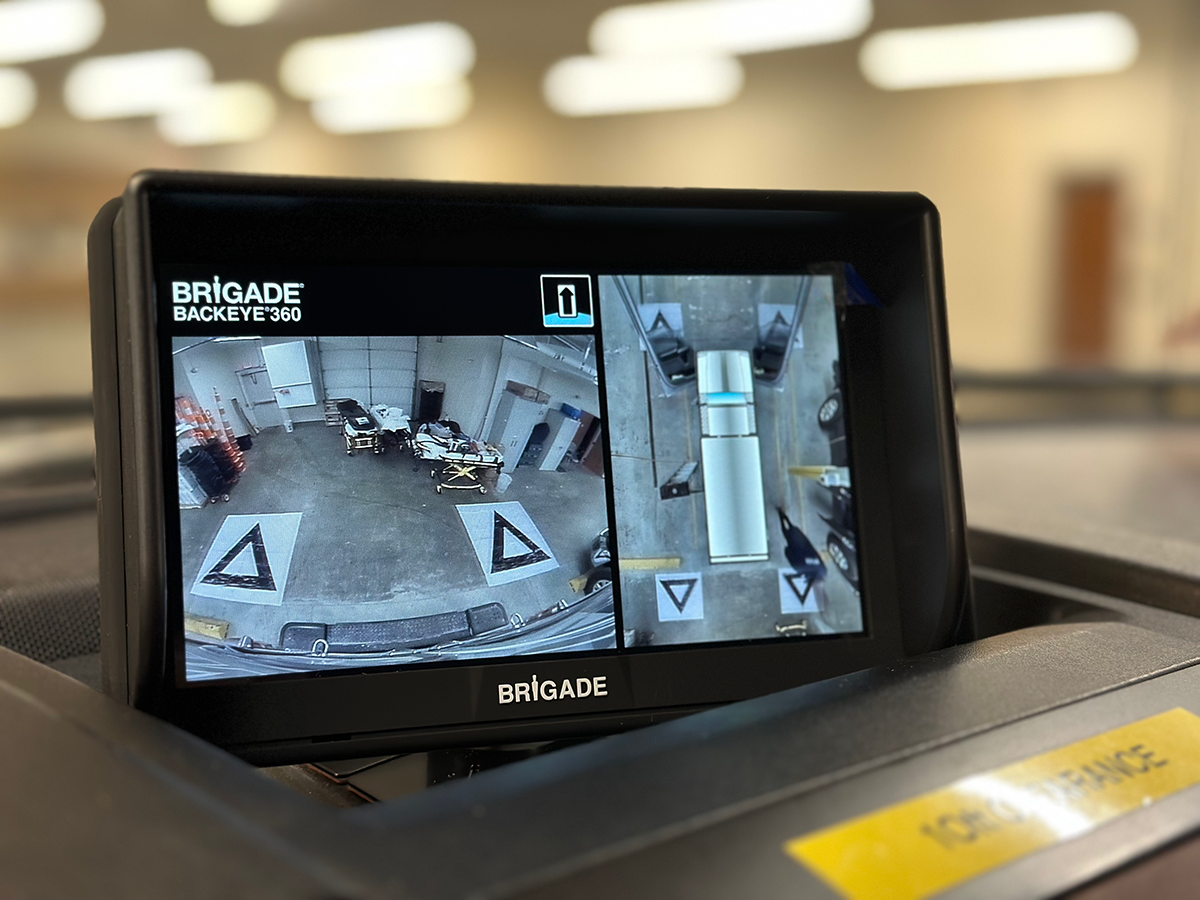
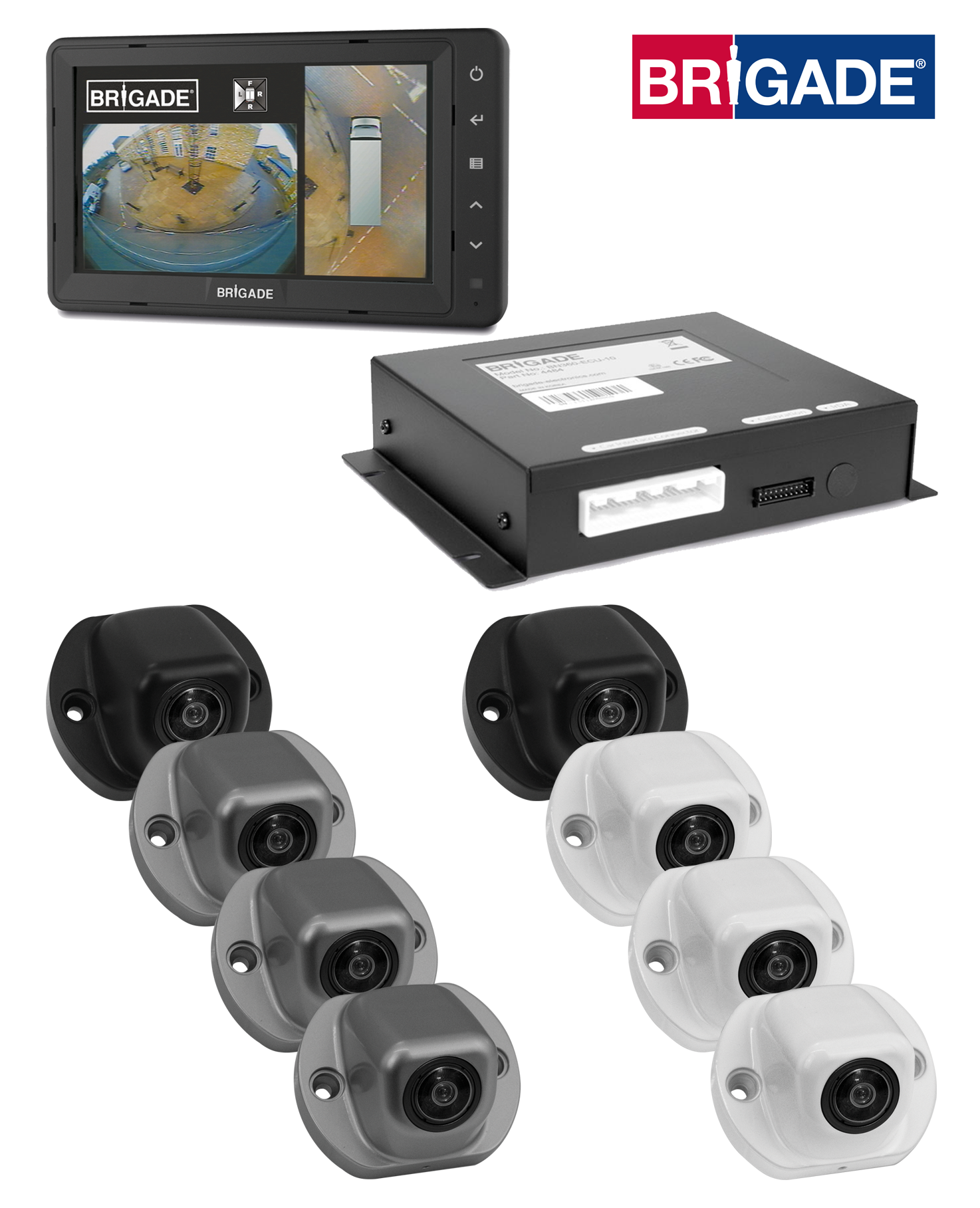
One of the main problems of special-purpose equipment is the presence of blind spots that cannot be fully controlled using mirrors alone. These zones most often cause run-over incidents, collisions, and equipment damage. This issue is effectively solved by surround-view systems BACKEYE 360°.
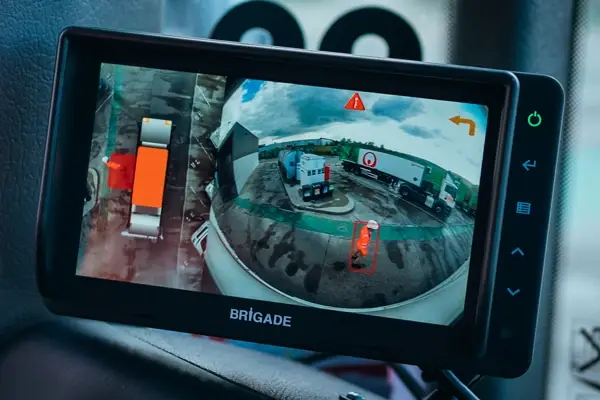
A surround-view system allows operators to observe equipment and surroundings from a virtual top-down perspective, eliminating critical visibility gaps. This is especially important when operating in confined spaces, construction sites, and areas with intensive pedestrian traffic.
- Creation of a unified image from cameras installed around the equipment perimeter.
- Full visibility of the surrounding environment without switching between mirrors.
- Reduced operator workload and faster response in hazardous situations.
A surround-view system allows operators to observe equipment and surroundings from a virtual top-down perspective, eliminating critical visibility gaps. This is especially important when operating in confined spaces, construction sites, and areas with intensive pedestrian traffic.
Safety During Maneuvering
Reversing, turning, and operating in narrow spaces are among the most dangerous stages of special equipment operation. Under poor visibility conditions, risks increase several times, making night vision cameras particularly important.
Key advantages of video surveillance systems during vehicle maneuvering include:
The use of cameras allows operators to maintain full situational awareness regardless of weather conditions or time of day. This makes maneuvering safer and more predictable while reducing the likelihood of accidents.
Key advantages of video surveillance systems during vehicle maneuvering include:
- Improved visibility when operating at night or in poor lighting conditions.
- Reduced likelihood of collisions with obstacles, people, or other vehicles.
- Increased precision and operator confidence during maneuvers.
The use of cameras allows operators to maintain full situational awareness regardless of weather conditions or time of day. This makes maneuvering safer and more predictable while reducing the likelihood of accidents.
Reduction of Accidents and Material Losses
Video surveillance directly contributes to reducing the number of accidents and cases of equipment damage. Continuous visual monitoring improves personnel discipline and helps prevent unsafe actions before incidents occur.
Even a single prevented accident can compensate for the cost of installing a video surveillance system. In the long term, companies achieve sustainable reductions in operating expenses and more stable fleet performance.
- Prevention of collisions with objects, machinery, and infrastructure.
- Reduction of downtime associated with repairs and accident investigations.
- Lower costs for equipment restoration and insurance payments.
Even a single prevented accident can compensate for the cost of installing a video surveillance system. In the long term, companies achieve sustainable reductions in operating expenses and more stable fleet performance.
Quality Control of Performed Work
Video recording makes it possible to assess not only safety but also the quality of performed production tasks. Internal cameras and external ones provide a complete picture of operator actions and work progress.
Video data helps identify mistakes, adjust workflows, and increase labor productivity. This is especially important when performing contract work where confirmation of quality and compliance with technological standards is required.
- Recording technological processes and operations in real time.
- Analysis of correct use of attachments and working mechanisms.
- Opportunity to train personnel using real video materials.
Video data helps identify mistakes, adjust workflows, and increase labor productivity. This is especially important when performing contract work where confirmation of quality and compliance with technological standards is required.
Protection of Company Interests in Dispute Situations
Camera recordings become reliable evidence when investigating conflicts and accidents. They make it possible to reconstruct the actual sequence of events without subjective interpretation.
The availability of video data protects businesses from unjustified claims and financial losses. This is particularly relevant under strict safety and carrier liability requirements.
- Use of video recordings during accident and industrial incident investigations.
- Confirmation of driver or company non-liability.
- Resolution of disputes with customers and regulatory authorities.
The availability of video data protects businesses from unjustified claims and financial losses. This is particularly relevant under strict safety and carrier liability requirements.
Online Monitoring and Remote Control
Modern video surveillance systems can operate in real time, transmitting data remotely. This significantly expands monitoring and fleet management capabilities.
Remote access allows dispatchers and managers to make operational decisions without being physically present at the site. This improves fleet manageability and reduces the impact of human factors.
- Online video access from any device by authorized personnel.
- Monitoring equipment presence along routes and compliance with designated work zones.
- Rapid response to emergency situations and deviations from regulations.
Remote access allows dispatchers and managers to make operational decisions without being physically present at the site. This improves fleet manageability and reduces the impact of human factors.
Where Video Surveillance Is Especially Important
Certain industries and types of work particularly require enhanced monitoring and increased safety measures. In these areas, video surveillance and other transport safety systems become critically important.
In these sectors, video surveillance helps protect lives, equipment, and company reputation. It becomes an integral part of modern and responsible special equipment operation.
- Construction and road equipment operating in densely built environments.
- Municipal special equipment interacting with pedestrians and residential areas.
- Quarry and industrial machinery with limited visibility.
In these sectors, video surveillance helps protect lives, equipment, and company reputation. It becomes an integral part of modern and responsible special equipment operation.